The Schroders 2026 Global Investor Insights Survey—based on responses from over 1,000 institutional investors, wealth gatekeepers and other intermediaries overseeing US$72 trillion in assets—explores investor perspectives on macroeconomic risks, investment priorities, and allocation strategies across public and private markets.
Key observations
85%
expect more volatility over the next 12 months due to macro and geopolitical risks.
85%
are confident active management can help achieve investment objectives, up from 75% last year.
1 in 2
equity and credit investors look across public and private markets to meet portfolio objectives.
Discover this year's key themes
84%
cite diversification as a top portfolio objective in the current environment
31%
plan to move assets from passive to active management
48%
value active management for its ability to manage concentration risk in equity markets
What matters most during “permanent” volatility?
As uncertainty becomes a more permanent feature of markets, investors are not standing still. They are prioritising diversification, resilience and active decision-making to help capture opportunities and manage the risks created by more concentrated markets.
What are your primary portfolio objectives in the current environment? Rank top 3.
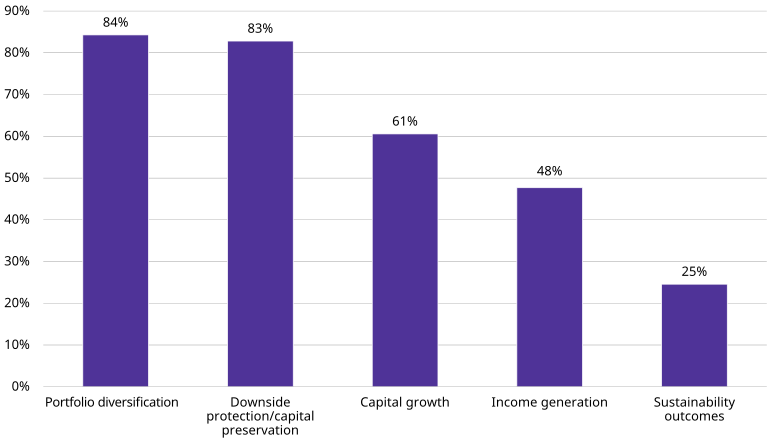
Source: Schroders Global Investor Insights Survey 2026.
47%
say liquidity differences between public and private markets are becoming more important
38%
are rotating into active management to address index concentration
53%
cite elevated valuations and limited margin of safety as a challenge for active equity long-only strategies
Long-term capital growth remains the priority for equity investors
For equity investors, long-term capital growth remains the priority. The route to growth is broadening across active fundamental equities, small and mid-cap strategies and private markets.
Which equity strategies do you primarily use to achieve the following objectives? [Long-term capital growth]
- 71% use active fundamental equity (long only)
- 65% use small and mid-cap strategies
- 62% use private equity (large cap buyout)
- 61% use private equity (growth capital/venture capital
Source: Schroders Global Investor Insights Survey 2026.
78%
have at least some allocation to private credit
53%
allocate 1-10% of their credit portfolio to private credit
Objectives drive flexible allocations across the credit continuum
Credit is being used for more than yield. Across public and private markets, investors are taking a more holistic view and matching different strategies to distinct portfolio objectives, from income and resilience to alpha.
Credit strategies are being matched to portfolio objectives
Objective
Top 2 sub-asset classes
Capital resilience
- Real estate debt
- Infrastructure debt
Reliable real yield/income
- Investment grade corporate bonds
- Developed market government bonds
Alpha generation
- Distressed/special situations credit
- Emerging market debt
Source: Schroders Global Investor Insights Survey 2026.
53%
rank diversification and regular cash flow among their top reasons for allocating to income
44%
allocate for volatility reduction and capital preservation
35%
cite active public corporate bonds as a top source of risk-adjusted income, compared with 9% for passive public corporate bonds
Income’s appeal broadens beyond income alone
Income is increasingly being used as a flexible portfolio building block, not simply as a source of yield. Investors are looking across asset classes for cash flow, diversification and resilience in a more volatile, inflation-sensitive environment.
When considering income producing opportunities across equities, fixed income and private markets, which approach best reflects your process?
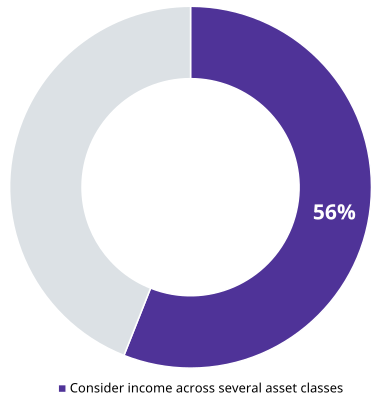
Source: Schroders Global Investor Insights Survey 2026.
70%
rank lower costs relative to active mutual funds among their top three benefits
Half
use active ETFs for diversification
1 in 4
use active ETFs for core equity allocation, while around 1 in 5 use them for core fixed income or credit allocation
Beyond cost: active ETFs are taking a more central role in portfolios
Active ETFs are becoming core portfolio tools, not just lower-cost wrappers. Investors are using them for diversification, tactical positioning and practical portfolio jobs, while cost, liquidity and transparency remain central to adoption.
Active ETFs are becoming flexible portfolio building blocks
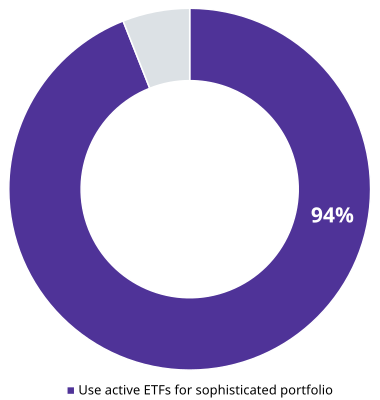
In which portfolio roles would you most value active ETFs? Select up to 3.
Source: Schroders Global Investor Insights Survey 2026.
70%
agree alternatives are increasingly being integrated into strategic asset allocation frameworks
Two thirds
agree alternatives provide meaningful diversification benefits relative to traditional assets
61%
say managing client expectations around liquidity is the biggest challenge when adding alternatives to wealth portfolios
Alternatives for wealth: widening the toolkit
For wealth investors, alternatives are becoming more strategic. The opportunity is clear, but implementation will depend on managing liquidity, fees and transparency as evergreen structures develop.
Evergreen demand is expected to build
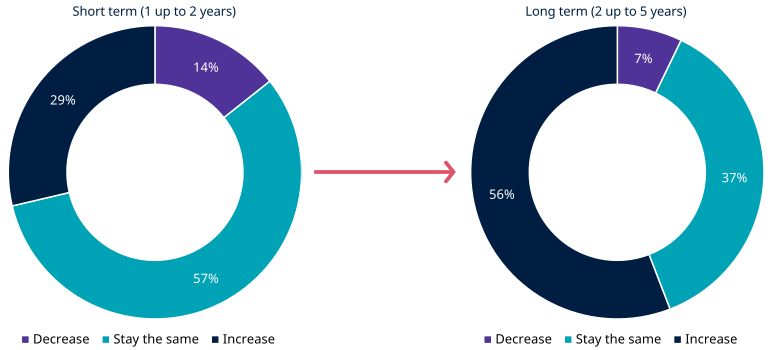
To what extent do you anticipate client demand for evergreen private market funds to increase or decrease in the short and long term?
Source: Schroders Global Investor Insights Survey 2026.
“Investors are adapting portfolios to a more complex and fragmented market. Diversification across regions, asset classes, investment styles and wrappers is becoming increasingly important in managing risk and building resilient portfolios."
Chief Investment Officer
About the survey
The research was carried out by CoreData Research via an extensive global survey during April - May 2026. The survey captures the perspectives of a broad spectrum of investors, including pension funds, insurance companies, single family offices, endowments and foundations, official institutions, and wealth managers and other intermediaries. The 1,025 respondents were split as follows: 282 from North America, 245 from Asia Pacific, 288 from Europe, 135 from the United Kingdom, 45 from Central and Southern America and 30 from Middle East and South Africa. Respondents are from 24 locations worldwide.
Stay informed with personalised insights
Subscribe to our insights and stay informed with personalised emails on the topics that interest you, at your preferred frequency.